Back To Blog
Cleaning Hacks
A Practical Guide to Cleaning with Bleach Safely
24 February 2026 Rickus.Jansen
If you’re wondering how to clean with bleach safely and effectively, you’re not alone. Bleach remains one of the most widely used disinfectants in the UK, valued for its ability to kill bacteria and viruses quickly. However, using bleach incorrectly can reduce its effectiveness and pose health risks.
This practical guide explains how to use bleach properly, what surfaces it is suitable for, when rinsing is required, and how to stay safe when cleaning with bleach at home or in the workplace.
Does Bleach Kill Germs and Bacteria?
Yes - when used correctly, bleach is highly effective. It destroys a wide range of microorganisms, including viruses, fungi and most bacteria. Many people ask, does bleach kill germs? And does bleach kill bacteria? The answer is yes, provided it is diluted correctly and left on the surface for the recommended contact time. Bleach works by breaking down the chemical bonds within microorganisms, effectively neutralizing them. However, it must be used on pre-cleaned surfaces, as dirt and organic matter can reduce its disinfecting power.How to Use Bleach to Clean Properly
Understanding how to use bleach to clean safely starts with correct dilution. Most household bleach products in the UK contain around 4–5% sodium hypochlorite. For general disinfection, a diluted solution is typically required. For most surfaces:- Dilute according to the manufacturer’s instructions (often around 1:50 for general disinfection).
- Always add bleach to water, not water to bleach.
- Use cold water, as hot water can reduce effectiveness.
- Apply to the surface and allow sufficient contact time (usually 5–10 minutes).
- Wipe clean with disposable cloths or paper towels.
Do You Need to Rinse Bleach Off?
A common question is, do you need to rinse bleach off after cleaning? In most domestic and office environments, surfaces that come into contact with food, skin or children should be rinsed thoroughly with clean water after the required contact time. This prevents residue build-up and reduces the risk of irritation. For floors and non-contact surfaces, rinsing may not always be necessary if diluted correctly, but following manufacturer guidance is essential. In commercial settings, particularly kitchens or healthcare environments, rinsing is generally recommended as part of safe hygiene practice.What Surfaces Can You Clean With Bleach?
Bleach for cleaning is best suited to hard, non-porous surfaces. These include:- Toilets and washroom surfaces
- Ceramic tiles
- Sealed countertops
- Sinks and drains
- Some plastic surfaces
Safety Precautions When Cleaning With Bleach
Cleaning with bleach requires sensible precautions to protect your health.- Ensure good ventilation by opening windows or using extractor fans.
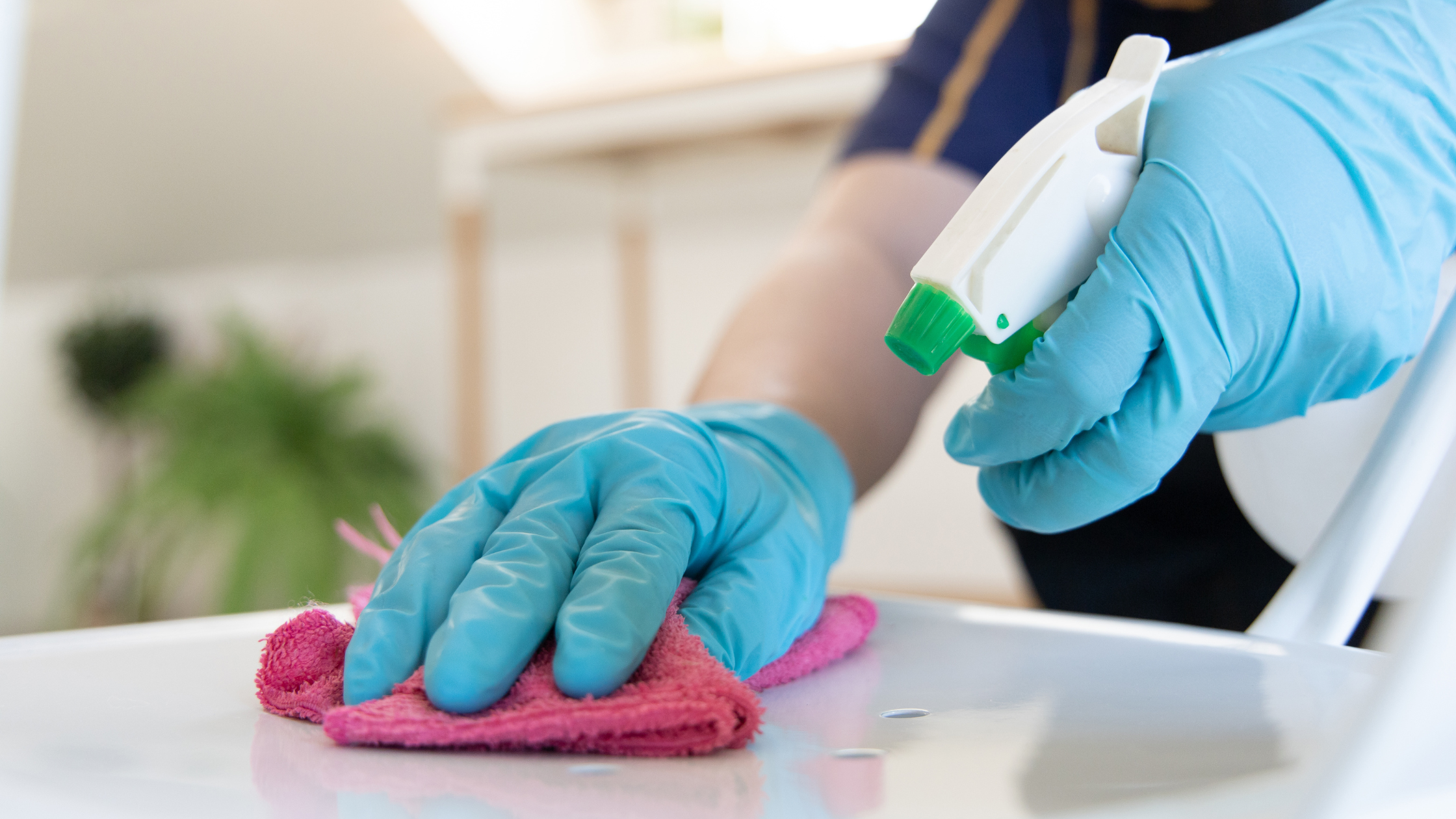
- Wear protective gloves to prevent skin irritation.
- Avoid inhaling fumes directly.
- Never mix with other chemicals.
- Store bleach securely away from children and direct sunlight.